



Originally published on European Gaming Media
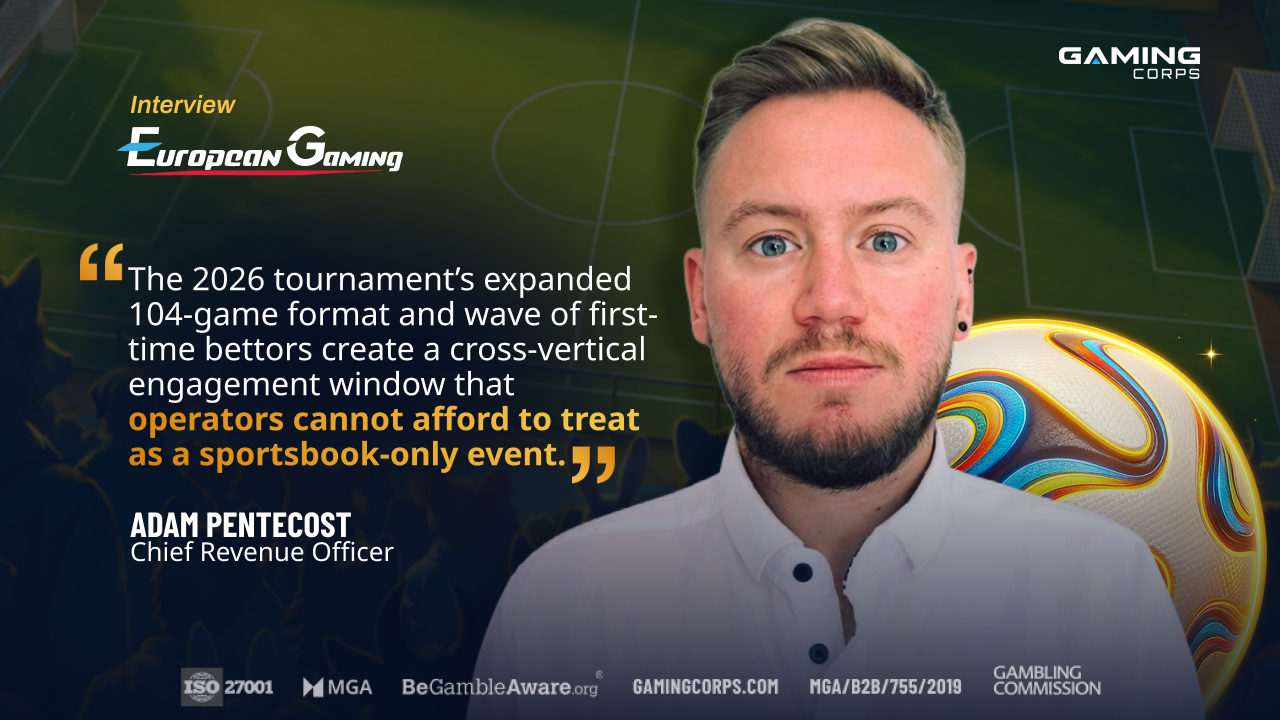
The 2026 tournament’s expanded 104-game format and wave of first-time bettors create a cross-vertical engagement window that operators cannot afford to treat as a sportsbook-only event.
The 2026 FIFA World Cup, the first to feature 48 teams and 104 fixtures, arrives as regulated online betting has reached scale in North America, creating conditions for mass acquisition that did not exist at previous tournaments.
According to Paysafe research All the Ways Players Pay – World Cup 2026 Edition, 60% of surveyed consumers across key regulated markets plan to place bets online or via an app during the tournament. 19% globally intend to do so for the first time.
A different kind of audience
The scale of first-time bettor interest is the number that might affect the operator’s strategy the most. In the United States, hosting the majority of matches alongside Canada and Mexico, 29% of surveyed consumers say the World Cup will be their first online betting experience, according to Paysafe’s report. Mexico follows at 26%.
A large part of the World Cup audience will not be made up of highly experienced sportsbook or casino players. Many will engage because of the tournament itself, the national storylines, the social element, and the wider excitement that surrounds a global football tournament.
For those players, the first experience with a brand has to feel clear, intuitive and relevant from the start. That does not mean every product has to be simplified. It means the route into the experience has to be simple.
Strong visual clarity, familiar themes, fast feedback and mechanics that can be understood quickly will all play an important role.
Match-day behaviour changes everything
The tournament’s cadence also matters. Paysafe’s data shows that 64% of bettors plan to place wagers on the day of the game or during the match itself, with only 36% intending to bet days in advance. Among US respondents, 51% say they will bet more than usual during the tournament.
That concentrated match-day pattern has direct consequences for what content needs to do. During a tournament where attention moves constantly between matches, live scores, social feeds and second-screen behaviour, content that supports shorter, sharper sessions is likely to feel especially relevant.
Retention stakes are high. The Paysafe research found that 88% of bettors would switch sportsbooks after a poor payment or product experience, rising to 93% in the US and Ecuador. The margin for a bad first impression is essentially zero.
Cross-vertical journeys as a strategic asset
The more consequential opportunity is structural rather than promotional. Football may be the acquisition hook, but engagement does not have to remain inside the sportsbook.There is a clear opportunity to take players from sportsbook into casino, from slots into arcade-style content, and from instant win back into broader portfolio discovery. The brands that benefit most will be those that make those journeys feel connected, rather than treating each vertical as a separate island.
The opportunity stretches further than betting alone, and the World Cup makes that case harder to ignore. The Paysafe data shows that:
- 58% of surveyed consumers plan to play soccer-themed video games during the tournament
- 56% expect to spend more on downloadable content than usual, rising to 68% in the US and 60% in the UK
The appetite for football-adjacent content is broad, and operators with a mixed portfolio of betting, casino, and arcade-style content are positioned to capture more of it.
Format matters as much as theme
The format diversity is the point, as one theme alone has its limitations.
Football imagery may create recognition, but it will not hold attention if the product underneath does not suit the moment.
The stronger opportunity lies in giving operators a connected mix of products that can appeal to different player types, from sportsbook-first users and casual football fans to slot players and audiences looking for faster, more immediate forms of entertainment.
For operators, it means that the theme gets attention, and the format keeps it. An arcade game fits the two minutes between checking the score and the next kick-off. A slot suits someone settling in for the evening. Instant-win lives somewhere between the two.
Gaming Corps has built its World Cup content strategy around this logic, offering three titles for different player types: Penalty Champion, an arcade-style instant-win game built around a sudden-death penalty shootout; Goals to Glory Football Fever, a video slot with cascading wins, stacked multipliers, and a 10,000x top prize; and Goals to Glory Instant Blitz, part of the studio’s new Instant Blitz series, which mixes instant-win simplicity with slot-style cluster mechanics.